

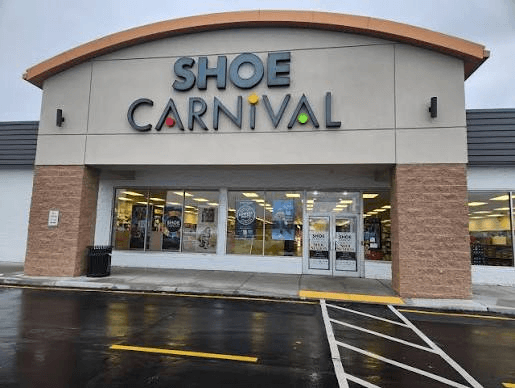
If you’re asking, “Is Shoe Carnival going out of business?”—stop and take a breath. There’s a lot of noise online, and the quick answer is: No, Shoe Carnival is not going out of business. What you’re seeing is a company in the process of **reshaping**, not disappearing. Store name changes, some closures, and a new focus on different banners make things look dramatic. But when you break it down, the company is simply updating its strategy. Here’s how to spot the difference between true risk and a calculated shift.
Shoe Carnival’s Operations: Where Do Things Stand?
The first step is to check the current scale. Shoe Carnival—now also operating as Shoe Station—still runs hundreds of stores in the US. As of February 2026, the total is 426 stores across 35 states and Puerto Rico. That’s a major footprint for a family footwear chain.
But the family footwear business has had a tough few years. Lower mall traffic, shifting consumer habits, and strong online competition make things challenging. If you’re in retail or thinking about it, this isn’t unique to Shoe Carnival. Most traditional chains have been forced to rethink how they serve customers.
So, what does this mean for the brand? They’re still moving merchandise, reporting earnings, and issuing strategy updates. Companies about to close usually stop these activities—you’d see bankruptcy news, liquidation sales, or silence. None of those are happening here.
Why Does It Seem Like Shoe Carnival Stores Are Closing?
Here’s where perception and reality split. The transition isn’t simple, and some decisions look scary at first:
- Store name changes (rebranding): The most visible shift is stores changing from “Shoe Carnival” to “Shoe Station.” This isn’t a permanent shutdown—just a pivot to a more upscale, less promotion-heavy brand. Picture walking up to your old Shoe Carnival and seeing a fresh “Shoe Station” banner. If you missed the news, you might assume the business is gone. It’s not; it’s just a new sign and perhaps a new feel inside.
- Corporate name change: The board and shareholders voted to change the company name from “Shoe Carnival, Inc.” to “Shoe Station Group” (or sometimes “Shoe Station, Inc.”) in late 2025. They’re even changing the stock ticker from SCVL to SHOE. This move signals a focus shift, but it doesn’t erase the old brand. A few Shoe Carnival stores will stay open, especially in key markets.
- Store closures and conversions: Yes, some locations are closing or becoming “clearance” stores. But this is on a very limited, targeted basis. Most closures hit underperforming stores, not the whole fleet. You’ll mostly notice this if you’re in a town with one of these locations.
The big lesson: Rebranding and select closures aren’t the same as shutting the company down completely.
Closer Look: Store Closures, Rebrandings, and Clearance Stores
Let’s get clear about what’s happening at ground level. Maybe you saw empty shelves, locked doors, or racks marked “clearance.” Here are the scenarios:
- The store may be rebranded—Shoe Carnival now operating as Shoe Station. This brings different inventory and sometimes targets a slightly different type of customer.
- Some stores are being converted to clearance outlets. This can look grim if you’re used to new arrivals every week. But the company’s intent is to move out slower items and test whether discount-first stores work better in some areas.
- A smaller number of sites are actually closing—12–14 closures in fiscal 2026 and another 6–10 expected in 2027. These are mainly lower-tier locations, not flagship or high-trafficked spots.
If you’re thinking about retail strategy, ask: “Is this store closing because the whole chain’s in trouble, or because they’re repositioning their footprint?” In this case, it’s the second answer.
Shoe Carnival’s Strategy: Two Brands, One Company
Let’s simplify. The company considered turning almost all stores into Shoe Stations—up to 80–90% by 2028. Then, after deeper review, leadership changed direction. Now, their plan is to operate two independent banners:
– Shoe Carnival: Value-oriented, heavy on events and promotional deals. Appeals to bargain-focused families.
– Shoe Station: Upscale, less about deals and more about curated brands for style-driven shoppers.
Here’s what matters: the interim CEO says, “We’re keeping both brands.” There’s no plan to turn everything into one banner. If a store is rebranded, it’s going to stay that way. They will not revert Shoe Station stores back to Shoe Carnival, no matter the rumors.
Tip: If you’re running a multi-brand retail operation, this approach hedges risk. You serve more types of shoppers and can test which model works best in each market.
Financial and Leadership Changes: What Do They Signal?
Sales pressures are real here—a 7.5% sales dip was reported in early 2025. That means management has to stay nimble. They’re not hiding from this. You’ll see them trying new store models, merging leadership positions, and adjusting the fleet size.
The leadership team itself has changed. Former CEO Mark Worden left, and Cliff Sifford, an experienced leader, stepped up as interim CEO. They’re actively searching for a new permanent chief.
A few things to consider when judging a business’s health:
– Are they still filing financial reports? (Yes)
– Is there public talk of bankruptcy? (No)
– Are they planning for growth—new concepts, new markets? (Yes, especially with Shoe Station stores)
– Are they slashing payroll or withdrawing from entire regions? (No)
– Is the company communicating with shareholders and the public? (Yes, with updates every quarter)
If you see these “continuing business” signs, you can feel more confident that this is restructuring, not liquidation. When you’re ready to run your own store, these are signs to watch for in your own business, too.
What’s Happening at Your Local Shoe Carnival?
If you walk into your local Shoe Carnival and find empty racks or a “Grand Re-Opening: Shoe Station” banner, don’t panic. Here’s how to decode what’s going on:
– If the sign changed, it’s a rebrand. Expect a new layout, different price points, and perhaps new brands.
– If stock is limited and there are steep markdowns, you might be seeing a clearance store or the final stage before a closure.
– Occasionally, the lease expires or the location underperforms. That’s when an actual closure happens. These cases are rare and announced with local signage or press.
Run a quick check in other cities: You’ll see Shoe Carnival locations thriving—especially in markets that respond well to value-focused deals or where retail foot traffic remains solid. On the other hand, Shoe Station stores are opening in areas that fit a higher-spend, brand-conscious shopper.
When you’re ready to start or grow your own business, remember: Smart companies adjust to shifting markets. That means experimenting with formats, testing new banners, and sometimes closing underperforming shops. A targeted strategy—not a panic move.
Real-Life Example: What Customers Are Seeing and Saying
Let’s say a customer walks into their neighborhood Shoe Carnival and is met by empty fixtures or the sign for Shoe Station. Their first thought might be, “They went under!” But a staff member explains, “We’re reopening as Shoe Station in a few weeks.” That’s a typical scenario—not a sign of a company-wide collapse.
If you’re curious about the numbers, only a handful of stores close each year—far from an all-out exit. Most stores either carry on or get a refresh. Compare that to classic bankruptcies where 50–100% of stores go dark overnight.
For entrepreneurs watching retail trends, this is a sign of endurance and flexibility. Shoe Carnival is betting some shoppers respond better to a new concept, and they’re putting real investment behind those bets.
How to Evaluate Rumors and Next Steps
Here’s a checklist for any business owner or market watcher:
– Confirm if the changes are company-wide or targeted (in this case, targeted).
– Look for official press releases or investor updates, not just local gossip.
– Track financial filings, store counts, and hiring plans.
– When evaluating your own market moves, remember that rebranding, repurposing locations, and tactical closures are normal. They might even be good signs—evidence that leadership is acting with urgency.
If you’re curious about other companies facing a similar situation, this article from In Business Point breaks down common patterns in retail restructuring and offers practical survival tactics.
Conclusion: Shoe Carnival’s Future and Key Takeaways for Entrepreneurs
Shoe Carnival is not going out of business, even though it may look that way in your neighborhood. The company is actively **restructuring, rebranding many stores as Shoe Station, and closing or converting a few weaker locations**. Their new strategy is all about dual-brand operation, serving different types of shoppers, and staying flexible in a rough retail climate.
For current customers, this means new options and layouts, not the loss of the chain. For entrepreneurs, the lesson is clear: Restructuring doesn’t equal failure. It often signals a leadership team willing to adapt, experiment, and take calculated risks.
When you’re ready to pivot or expand, use these questions: What does the data say about your top-performing locations? Who is your new ideal customer? What is your clear monthly target—and how can you achieve it with your existing resources?
Keep a close eye on your metrics, plan for changes, and don’t be afraid to rebrand if the market shifts under your feet. Shoe Carnival proves that thoughtful adaptation—rather than stubborn tradition—is what keeps a business in the game.
In other words: Store closures are not the whole story. Shoe Carnival, as a company, remains firmly in business—just in a smarter, more agile way.
Also Read This: